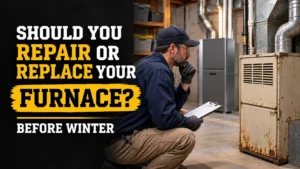
A furnace issue in October raises a familiar question: is it smarter to repair the system or invest in a replacement before cold weather arrives? The right answer depends on the condition of your equipment, the cost and type of repair, and how well the system heats your home.
When a repair may be reasonable
A professional repair can make sense when the furnace has been reliable, the problem is isolated, replacement parts are available, and the repair cost is modest compared with installing a new system. A relatively minor control or sensor issue is a different decision from a major failure involving several expensive components.
Ask the technician for a written diagnosis, an itemized estimate, and an explanation of whether the repair addresses the root cause.
When replacement deserves consideration
Recurring breakdowns: Multiple repairs over a short period can make an aging system expensive to maintain.
Major component problems: Significant issues involving the heat exchanger, blower, or other critical parts may change the economics of keeping the system.
Persistent comfort problems: If the house has never heated evenly, replacement might help—but only after checking ductwork, insulation, thermostat placement, and sizing.
Efficiency and age: An older furnace may consume more fuel than a properly selected modern system. However, age alone does not automatically mean replacement is necessary.
Compare total cost, not just today’s bill
Consider the repair estimate, possible upcoming maintenance, utility bills, warranties, and expected years of service. For a replacement, evaluate installed cost, equipment efficiency, available rebates or financing, and whether duct modifications are needed. Ask for an explanation of the installation scope rather than comparing equipment prices alone.
Proper sizing matters
Buying a larger furnace doesn’t necessarily mean a warmer, more comfortable home. Equipment that is too large may cycle excessively, while undersized or poorly distributed systems can struggle. A qualified contractor should evaluate the home’s heating needs and connected ductwork before proposing replacement.
Questions to ask your HVAC contractor
- What failed, and why?
- Is it safe to keep running the system?
- What is the full cost of repair and its warranty?
- Are other problems likely in the near term?
- What changes in comfort or energy use might a replacement provide?
Make the decision before a cold-weather emergency
A planned installation usually gives you more time to compare choices than an unexpected no-heat call. BMB & Sons works with South Jersey homeowners on heating repairs and replacement planning. Call (609) 513-1742 or visit bmbsons.com for an assessment and a clear explanation of your options.